

Luxury Resale Platforms Market to Reach USD 104.5 Billion by 2036 at 9.6% CAGR Driven by Circular Economy Trends
Luxury Resale Platforms Market
Circular economy mandates and authenticated digital marketplaces transform pre-owned luxury goods into a structured global asset class
NEWARK, DE, UNITED STATES, March 17, 2026 /EINPresswire.com/ -- The global luxury resale platforms market is poised for strong expansion over the next decade, growing from USD 41.6 billion in 2026 to USD 104.5 billion by 2036, registering a CAGR of 9.6%. According to the latest analysis by Future Market Insights (FMI), growth is fueled by rising adoption of authenticated resale ecosystems, increasing demand for circular consumption, and the transformation of pre-owned luxury goods into investment-grade assets.
Luxury resale platforms are redefining premium fashion ecosystems by enabling secure, verified transactions supported by blockchain provenance, AI-powered authentication, and structured resale mechanisms. As primary luxury pricing remains volatile, consumers increasingly turn to trusted secondary channels offering transparency, value retention, and liquidity.
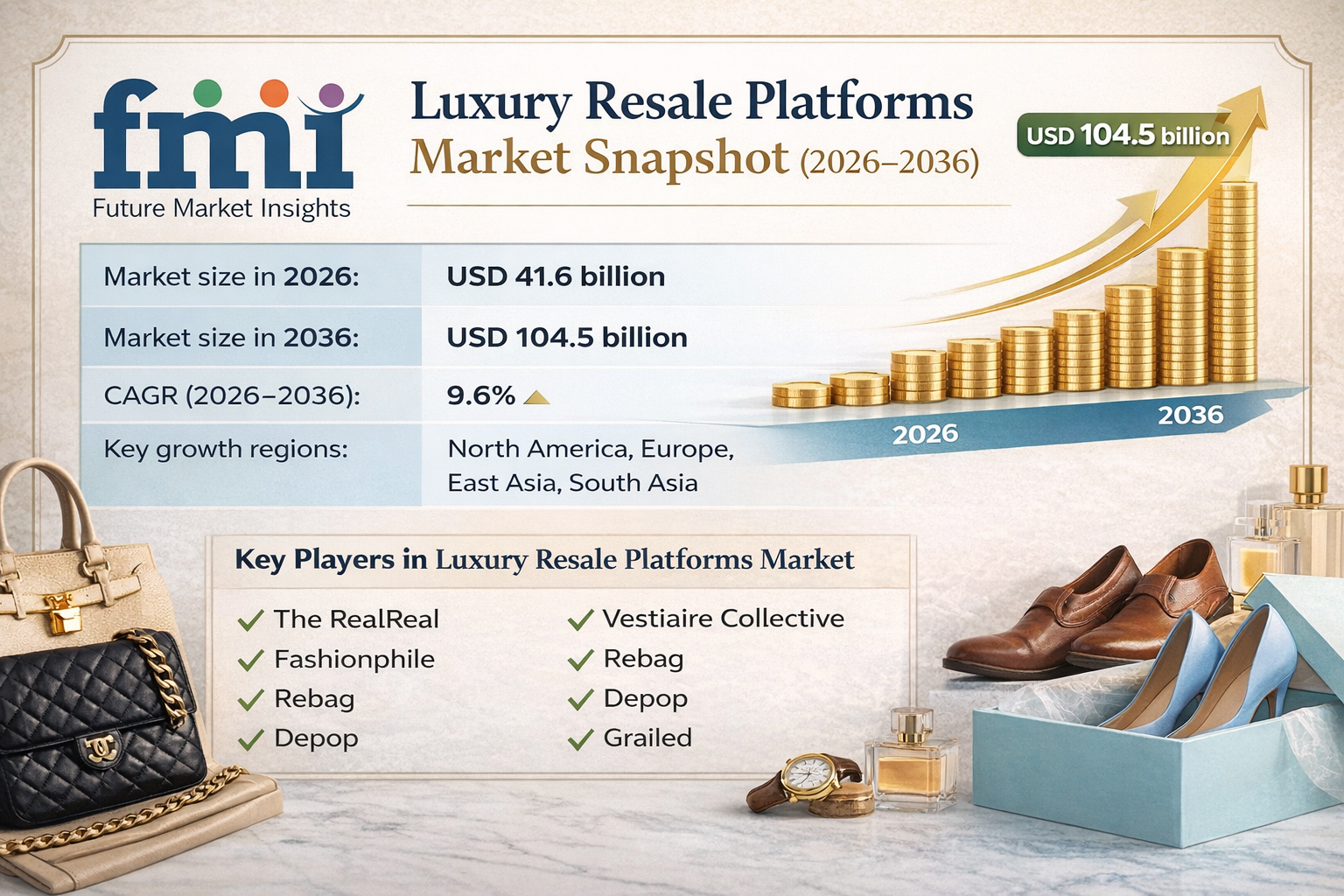
Luxury Resale Platforms Market Snapshot (2026–2036)
• Market size in 2026: USD 41.6 billion
• Market size in 2036: USD 104.5 billion
• CAGR (2026–2036): 9.6%
• Leading product segment: Handbags (~32.0% share)
• Dominant platform type: Online platforms (~70.0% share)
• Key growth regions: North America, Europe, East Asia, South Asia
• Fastest-growing countries: USA, UK, France, China, India
Request For Sample Report | Customize Report |purchase Full Report – https://www.futuremarketinsights.com/reports/sample/rep-gb-32250
Market Momentum
The luxury resale platforms market enters 2026 at USD 41.6 billion, supported by increasing participation from affluent consumers and first-time premium buyers seeking authenticated secondary goods. By 2031, platform adoption accelerates as brands integrate resale into sustainability strategies and digital marketplaces expand authentication capabilities.
Between 2031 and 2036, growth intensifies as blockchain-enabled provenance, AI-driven condition grading, and real-time pricing tools mature across platforms. By 2036, the market reaches USD 104.5 billion, maintaining a robust 9.6% CAGR driven by institutionalization of resale as a formal asset class.
Why the Market Is Growing
Demand for luxury resale platforms is rising as consumers prioritize value retention, sustainability, and transaction transparency. High-net-worth individuals and millennials increasingly view luxury goods—especially handbags, watches, and jewelry—as appreciating or stable-value assets rather than depreciating purchases.
Luxury brands are also integrating resale into ESG strategies to reduce environmental impact and extend product lifecycles. This shift is pushing platforms to evolve from informal marketplaces into structured ecosystems offering authentication, escrow services, and portfolio-style asset tracking.
At the same time, economic uncertainty is prompting affluent buyers to diversify spending through resale channels, where they benefit from lower entry prices and stronger resale value. Platforms that provide verified authenticity and seamless user experiences are capturing growing transaction volumes across global fashion markets.
Segment Spotlight
Product Type: Handbags Lead with ~32.0% Share
Handbags dominate the luxury resale segment due to strong resale value, brand recognition, and investment appeal. Many premium handbags retain over 70% of their original retail value, making them key drivers of platform liquidity. Apparel, watches, and jewelry follow as complementary segments.
Platform Type: Online Platforms Dominate (~70.0% Share)
Online platforms lead the market due to seamless mobile integration, global accessibility, and real-time transaction capabilities. Features such as AR try-ons, live auctions, and AI authentication enhance user engagement and conversion rates, while physical resale boutiques play a secondary role.
Regional Growth: North America, Europe, and Asia Drive Expansion
North America leads market maturity with strong adoption of authenticated resale as a portfolio management tool for luxury goods. Europe follows with heritage-driven demand and emphasis on provenance and curation.
Asia Pacific, particularly China and India, emerges as a high-growth region driven by rising digital adoption, aspirational consumers, and increasing awareness of resale value. These markets are transitioning from informal resale practices to structured platform-based ecosystems.
Drivers, Opportunities, Trends, Challenges
Drivers:
• Circular economy mandates and sustainability goals
• Growing demand for authenticated luxury resale
• Rising participation from millennials and affluent consumers
Opportunities:
• Blockchain-enabled provenance tracking
• AI-driven authentication and pricing tools
• Brand-integrated resale partnerships
Trends:
• Transformation of luxury goods into investment assets
• Expansion of online and mobile resale platforms
• Increasing focus on transparency and trust mechanisms
Challenges:
• High authentication and operational costs
• Platform fees limiting low-volume seller participation
• Fraud risks in non-verified resale channels
Competitive Landscape
The luxury resale platforms market is highly competitive, with players differentiating through authentication strength, inventory quality, and user experience. Leading companies are investing heavily in blockchain verification, AI grading systems, and premium seller services to enhance trust and retention.
Key players include The RealReal, Vestiaire Collective, Fashionphile, Rebag, Depop, and Grailed. These companies are redefining resale ecosystems by combining technology, curation, and community engagement to attract both collectors and aspirational buyers.
As the market evolves, competition will increasingly focus on building credibility, improving transaction transparency, and integrating resale into broader luxury retail strategies.
Frequently Asked Questions (FAQs)
1. What is driving the growth of the luxury resale platforms market?
Growth is driven by rising demand for authenticated resale, sustainability initiatives, and increasing perception of luxury goods as investment assets.
2. What will be the market size by 2036?
The market is projected to reach USD 104.5 billion by 2036.
3. Which segment leads the market?
Handbags lead with around 32% market share due to strong resale value and high demand.
4. Which platform type dominates the market?
Online platforms dominate with approximately 70% share, driven by digital convenience and global reach.
5. Which regions show the highest growth potential?
North America, Europe, and Asia Pacific are key growth regions, with strong expansion in the USA, China, and India.
Why FMI: https://www.futuremarketinsights.com/why-fmi
Explore more research reports by FMI
Acoustic Doors Market: https://www.futuremarketinsights.com/reports/acoustic-doors-market
Contact Lenses Market: https://www.futuremarketinsights.com/reports/contact-lenses-market
Robotic Vacuum Cleaners Market: https://www.futuremarketinsights.com/reports/robotic-vacuum-cleaners-market
About Future Market Insights (FMI)
Future Market Insights, Inc. (FMI) is an ESOMAR-certified, ISO 9001:2015 market research and consulting organization, trusted by Fortune 500 clients and global enterprises. With operations in the U.S., UK, India, and Dubai, FMI provides data-backed insights and strategic intelligence across 30+ industries and 1200 markets worldwide.
Sudip Saha
Future Market Insights Inc.
+1 347-918-3531
email us here
Legal Disclaimer:
EIN Presswire provides this news content "as is" without warranty of any kind. We do not accept any responsibility or liability for the accuracy, content, images, videos, licenses, completeness, legality, or reliability of the information contained in this article. If you have any complaints or copyright issues related to this article, kindly contact the author above.
